Why Are Tattoos Permanent, and Where Does the Ink Actually Go?
SEPTEMBER 26, 2026
A video going around this week — an AI-narrated animation of a tattooed forearm cut open, titled "a hidden graveyard" — claims tattoos work by a mechanism most people have never heard: immune cells eat the ink, die, and hand it off to the next one, forever. That part is real, and it's better-documented than the video makes it sound. The obvious model of "the ink just sits in your skin cells" is not what happens, and the actual mechanism, worked out by a French immunology lab in 2018, also explains something else the video doesn't get into: a share of that ink never stays in the skin at all.
I did not know this
— Fletch17 (@RealFletch17) September 26, 2026
About tattoos 😳😳 pic.x.com/5PyCgB2tsi
The cells that actually hold the ink
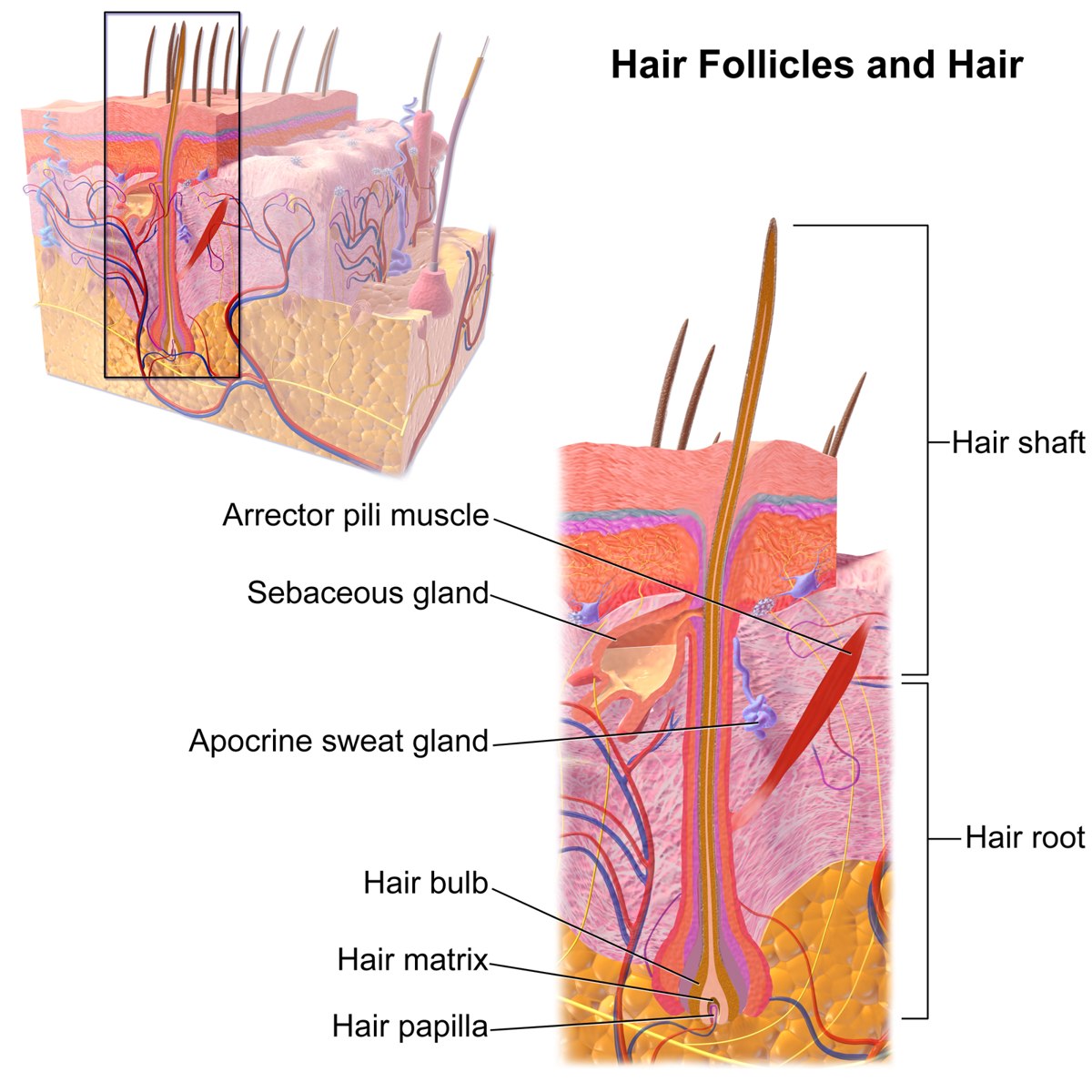
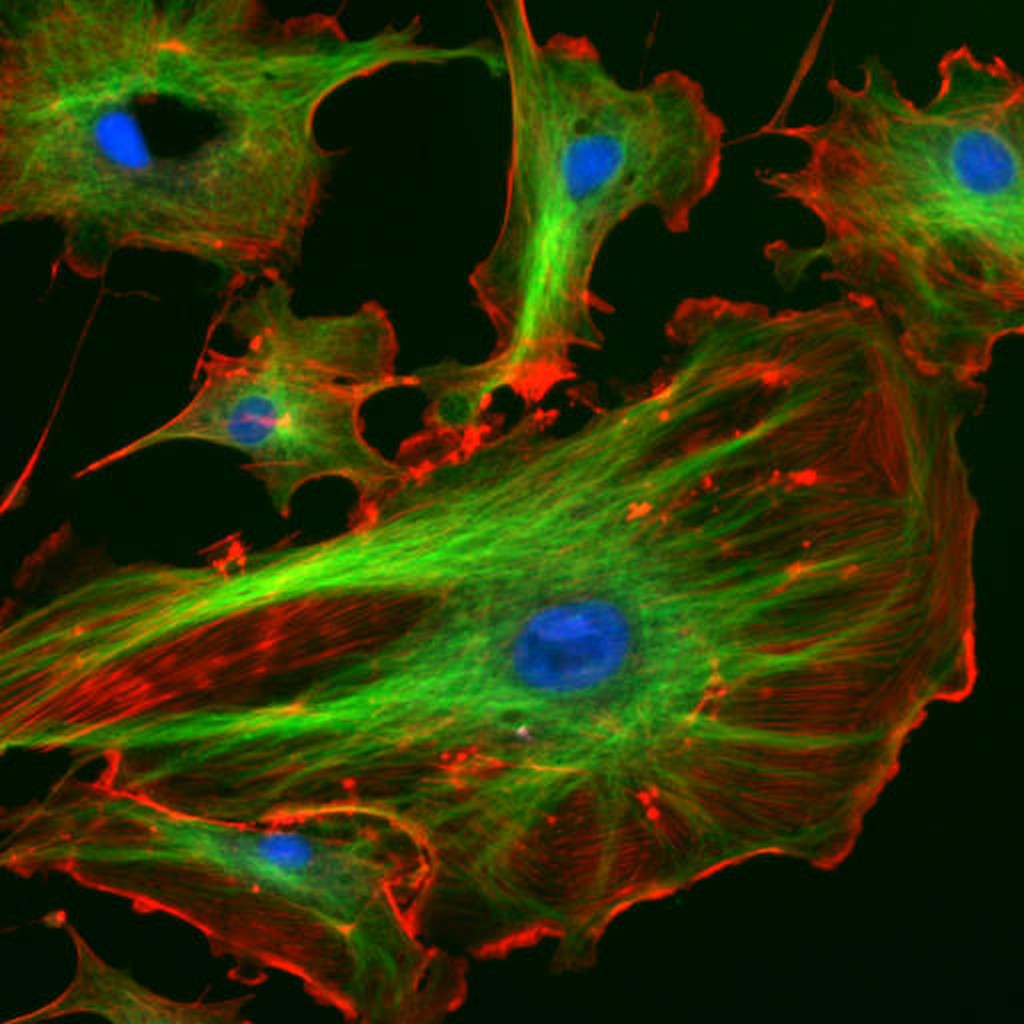
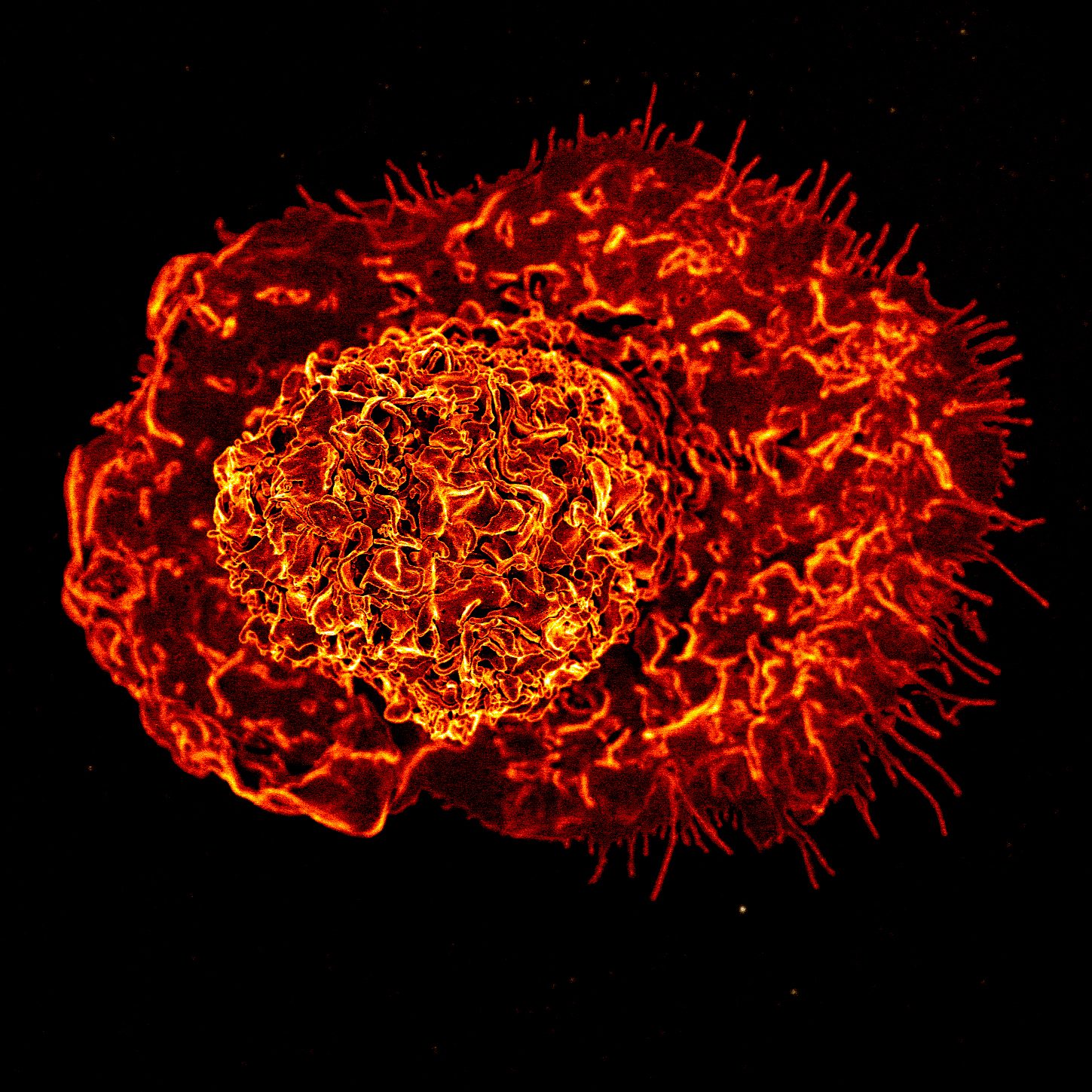
When a tattoo needle punctures skin thousands of times a second, most of the ink it deposits never enters a skin cell at all. It lands in the dermis as an open wound, and the immune system responds to it exactly as it would to any foreign debris: macrophages — the immune cells whose whole job is to engulf and clear anything that doesn't belong, shown above — arrive and swallow the pigment particles. A 2018 study in the Journal of Experimental Medicine tattooed the tails of mice and then tracked exactly which cells held the pigment over time. Dermal macrophages were the only cell type doing it [1].
Here's the part that explains permanence. Macrophages are not permanent cells — they die and get replaced on an ordinary schedule, the same as any other immune cell. The researchers killed off the ink-carrying macrophages deliberately and watched what happened to the tattoo. It didn't fade. The dead macrophages released their captured pigment back into the surrounding tissue, and new macrophages arriving from the bloodstream simply picked it back up [1]. A tattoo isn't a fixed deposit; it's a capture-release-recapture cycle that can repeat indefinitely without the picture ever changing on the surface — which is also why the "graveyard" framing in the video is roughly right: the dermis under a tattoo really is full of ink-laden macrophages, living and dying in place, generation after generation, for as long as the tattoo exists.
This is also why laser removal is hard in a specific, mechanistic way, not just "the ink is stubborn." A laser pulse shatters a pigment particle into much smaller fragments — but if a fresh macrophage recaptures those fragments before they can drain away, the tattoo simply reforms around smaller particles. The same 2018 paper's authors have proposed that temporarily clearing macrophages from the treatment area, rather than firing the laser alone, should let fragmented pigment drain through the lymphatic system instead of being recaptured [1] — an approach aimed at treatment, not something a reader can act on today.
Where the ink that doesn't stay actually goes
Not every particle is the same size, and size decides its fate. A 2017 study used synchrotron X-ray fluorescence and infrared microscopy — a much finer-grained look than ordinary microscopy allows — on tattooed skin and its draining lymph nodes, and found a clean split: particles up to several micrometres across stayed put in the skin, while only the much smaller nanoparticles — including titanium dioxide, the white pigment used to lighten tattoo ink, along with trace chromium, nickel and cobalt from the ink's other pigments — were found transported into the lymph nodes [2]. That's the reason a tattoo can occasionally show up on an unrelated medical scan: enlarged, pigment-darkened lymph nodes downstream of an old tattoo are a real, documented finding, and pigment deposited decades earlier is still detectable there.
What that ink might be doing once it's there
This is the newest and least settled part. A November 2025 study in the Proceedings of the National Academy of Sciences tattooed mice, then gave them an mRNA COVID-19 vaccine, and found that the tattoo ink sitting in the draining lymph node caused measurable, sustained inflammation there — still detectable two months after tattooing — and that the tattooed mice mounted a weaker antibody response to the vaccine than untattooed controls, alongside reduced expression of the vaccine's target protein inside the ink-carrying macrophages themselves [3].
What the evidence says. A tattoo is permanent because dermal macrophages continuously capture, die, release and re-capture the ink — not because the ink sits inertly in place — a mechanism demonstrated directly in mice and consistent with how human tattoos actually behave. Separately, the smallest ink particles (nanoparticles, including titanium dioxide from white ink) do leave the skin and accumulate in the draining lymph nodes, while larger particles stay put — measured directly in human tissue. What's newest and least settled: a single 2025 mouse study found tattoo-driven lymph node inflammation blunted the antibody response to an mRNA vaccine. That's one animal study, not a demonstrated effect in humans, and it says nothing about whether real-world tattooed people respond differently to vaccines in practice — that trial hasn't been done. It's a genuinely new finding worth watching, not yet a reason to change how anyone thinks about getting a tattoo or a vaccine.
Sources
- Baranska A, Shawket A, Jouve M, et al. Unveiling skin macrophage dynamics explains both tattoo persistence and strenuous removal. Journal of Experimental Medicine, 2018. doi:10.1084/jem.20171608
- Schreiver I, Hesse B, Seim C, et al. Synchrotron-based ν-XRF mapping and μ-FTIR microscopy enable to look into the fate and effects of tattoo pigments in human skin. Scientific Reports, 2017. doi:10.1038/s41598-017-11721-z
- Capucetti A, Falivene J, Pizzichetti C, et al. Tattoo ink induces inflammation in the draining lymph node and alters the immune response to vaccination. Proceedings of the National Academy of Sciences, 2025. doi:10.1073/pnas.2510392122
This is one reader's reading of the research, not medical advice. If something here touches on your own health, take it to a clinician who knows you — and read how these entries are put together.