How Fenbendazole and Mebendazole Actually Kill a Parasite
SEPTEMBER 28, 2026
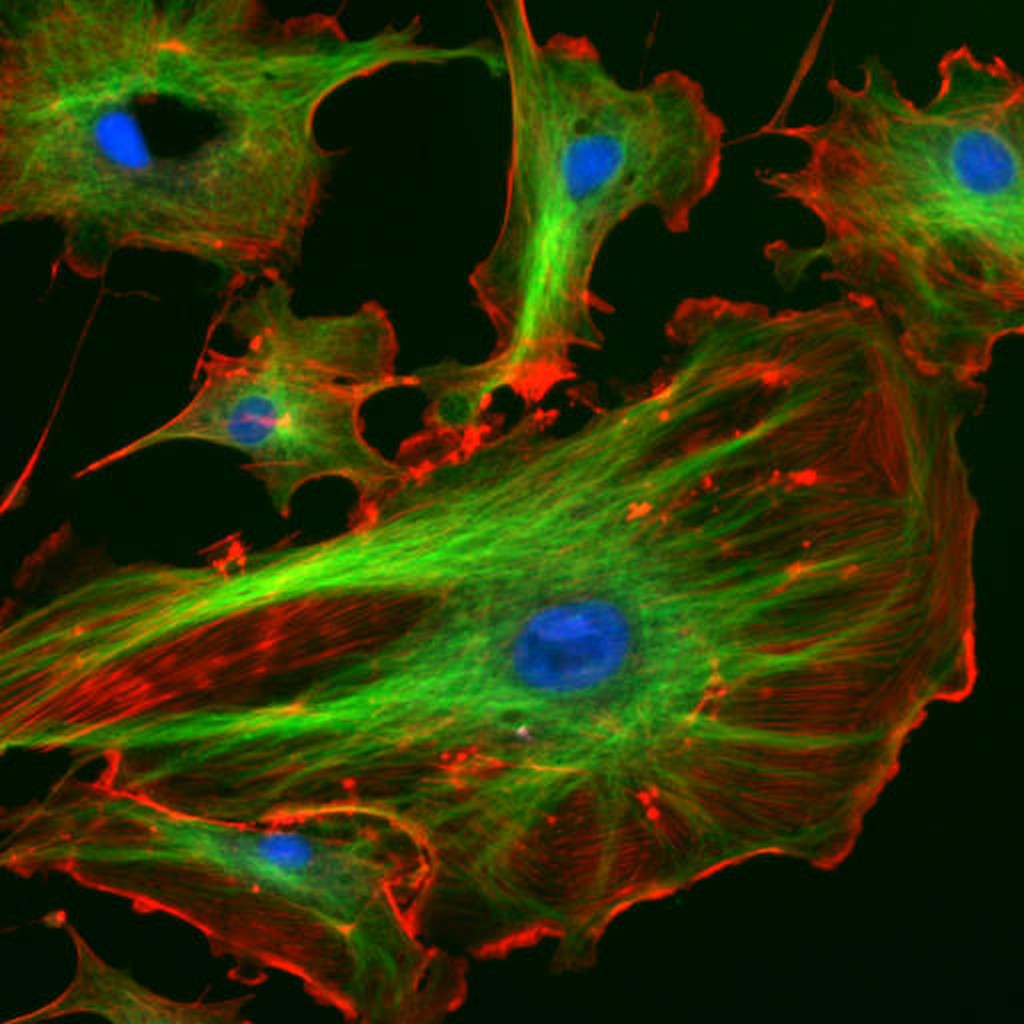
How do fenbendazole and mebendazole actually kill an intestinal parasite? Not by poisoning it on contact. Both belong to a drug class called benzimidazoles, and they work by occupying a single protein, beta-tubulin, that a parasite's internal scaffolding is built from — jamming it until the parasite's own glucose supply collapses and it starves, usually over several days rather than in one dose.
The Scaffold the Drug Is Actually Targeting
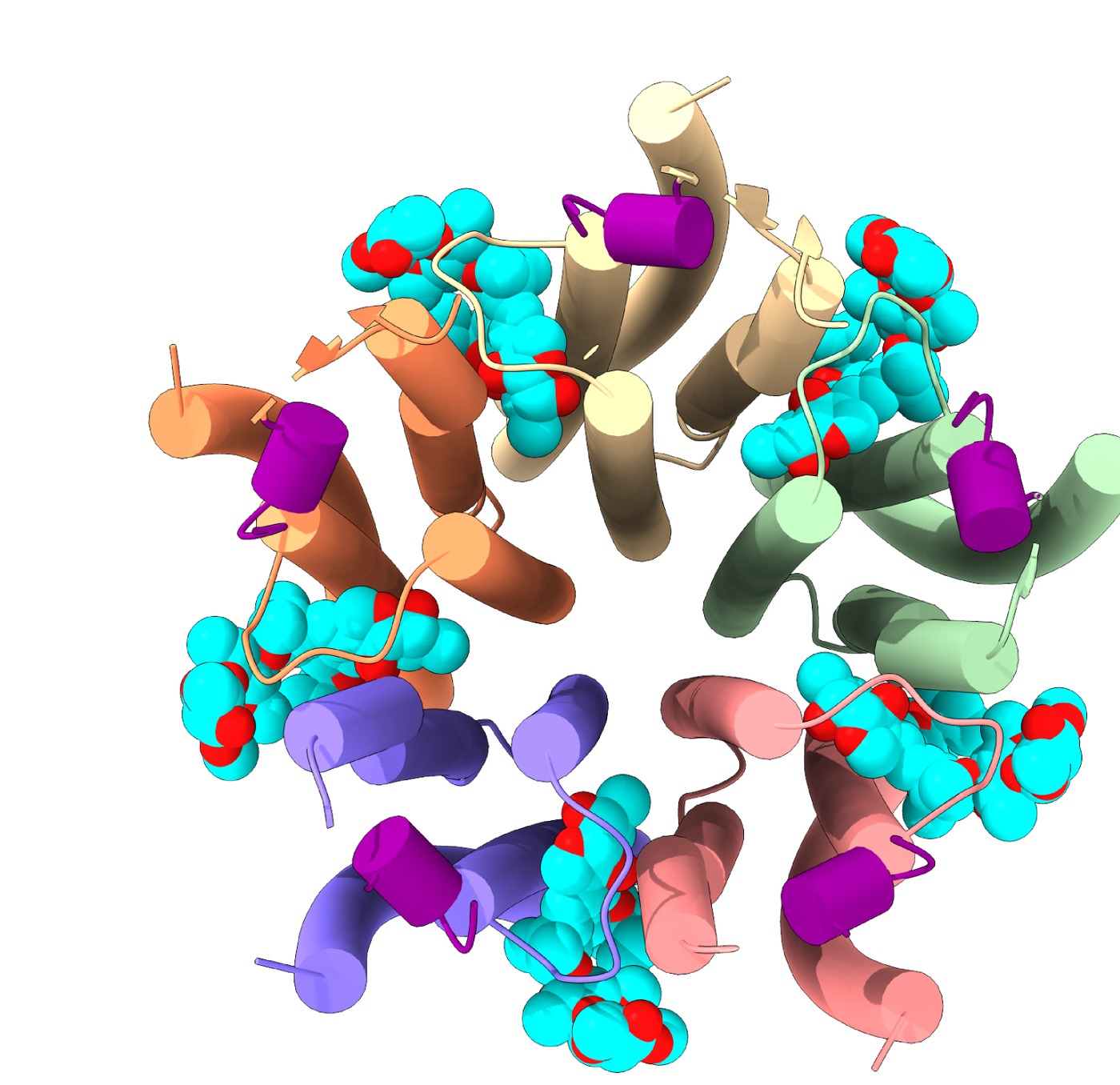
Every cell, a parasite's included, builds an internal skeleton out of long, hollow protein tubes called microtubules. They're built from a protein called tubulin, which comes in two forms, alpha and beta, permanently paired into a two-part unit called a dimer — a compact structure about 8 nanometers long. Line thirteen columns of dimers up side by side and curve them around, and they close into a hollow tube roughly 25 nanometers across on the outside, one that can then run for micrometers, thousands of times longer than it is wide. The cell uses that tube as an internal rail line: cargo, including the glucose transporters a parasite's gut cells depend on, rides along it to reach the surface.
Where the Drug Binds
Every new dimer joins a growing microtubule at the same spot: an open seat on the beta subunit at the tip. Fenbendazole and mebendazole bind directly to that seat, with far higher affinity for a susceptible parasite's beta-tubulin than for the host's own — a difference researchers have worked out down to the structural level by modeling the shape of the binding pocket itself. Once a drug molecule occupies the seat, the next dimer has nowhere to attach. Growth at the tip stops, while the rest of the tube keeps disassembling at its normal rate with nothing replacing it.
Why the Kill Takes Days, Not Minutes
A stalled scaffold has one especially costly consequence for a gut-dwelling worm: its own gut cells can no longer move enough glucose transporters to their surface, so glucose uptake collapses. The parasite burns through its glycogen reserves with nothing coming in to replace them, and eventually starves. That's why treatment courses run over several days instead of a single dose — binding happens almost immediately, but the kill depends on the parasite's own reserves running dry first. Cells that are actively dividing, including eggs and developing larvae, fail a second way: without a working mitotic spindle, built from the same tubulin, they can't finish splitting in two.
Why This Barely Touches the Host
Two separate properties keep the effect selective rather than indiscriminate. First, the beta-tubulin binding pocket in a susceptible parasite is shaped to hold these drugs tightly, while the equivalent mammalian pocket binds them far more loosely. Second, both drugs are deliberately poor at crossing the gut wall: a comparative review of anthelmintic pharmacology puts oral bioavailability in the low range, rising meaningfully when the dose is taken with fatty food. Most of an oral dose simply stays in the intestinal lumen, next to the parasite that lives there, instead of reaching the bloodstream in a meaningful concentration. Together, these two properties are a large part of why this drug class has decades of veterinary use and a spot on the WHO's Model List of Essential Medicines.
When the Parasite Isn't in the Gut
That gut-confinement story is specific to a gut-lumen worm, though, not a fixed property of the drug. A parasite that has migrated into tissue depends on exactly that small absorbed fraction to be reached at all, and getting enough drug there takes a very different regimen. The clearest real-world example doesn't even need a different species: encysted small strongyle larvae (cyathostomins), which burrow into the wall of a horse's own large intestine rather than staying in the open gut lumen, don't reliably clear on a single normal dose. The standard fix, sold as a five-syringe "Power Pack," is a double dose of fenbendazole given once a day for five straight days instead of once — the only FDA-approved regimen effective against all encysted stages, clearing roughly 98% of the hardest-to-reach larvae.
In people, the same logic applies to Trichinella larvae actually encysted in skeletal muscle, the cause of trichinosis. CDC's clinical guidance for health professionals lists mebendazole at 200–400 mg three times a day for three days, then 400–500 mg three times a day for ten more days — about two weeks total — or albendazole 400 mg twice a day for 8 to 14 days, both far higher and longer than a routine gut-worm course. The binding mechanism doesn't change with location. Getting an adequate concentration of the drug there does.
Fenbendazole, Mebendazole, and Albendazole Are the Same Trick
All three belong to the same benzimidazole carbamate family and bind the identical seat on beta-tubulin. Fenbendazole carries the veterinary label, mebendazole and albendazole the human ones, and albendazole in particular is favored for tissue disease because it's absorbed and distributed more efficiently than the other two. Resistance arises from mutations clustered at a handful of spots in that shared beta-tubulin gene — first mapped in a parasitic nematode of sheep at amino acid 200 — which is part of why a parasite population resistant to one benzimidazole is often resistant to the others as well.
Where the Cancer Claims Diverge from the Evidence
None of the above is in dispute; it's textbook parasitology, worked out over decades of veterinary and human use. The claim that fenbendazole treats human cancer is a different matter, and it traces to a specific source: a stage-four lung cancer patient's account of self-administering the dog dewormer, which went viral in 2019 and, per a 2022 paper examining the fallout, drove a wave of Korean cancer patients to self-medicate with it, sometimes without telling their oncologist. The underlying biology isn't fantasy — published lab studies do find that fenbendazole binds mammalian tubulin as well, just more weakly than it binds a parasite's, and that it kills cultured human cancer cells at reachable concentrations by disrupting several pathways at once, mitosis included. What hasn't happened is the next step: a completed clinical trial in actual cancer patients confirming that effect translates into a real outcome. Cell culture and mouse data are a reason to study a drug further, not a substitute for having done so.
What the evidence says. The mechanism itself is settled: fenbendazole and mebendazole bind beta-tubulin at a specific seat, block microtubule assembly, and starve gut-dwelling parasites over several days rather than killing them on contact — modeled down to the structural level and confirmed across decades of veterinary and human use. Reaching a parasite outside the gut takes a much higher, longer dose, because the same low absorption that keeps the drug safe for the host also keeps most of it out of the bloodstream. Extending this mechanism to human cancer treatment is a separate, far thinner claim, resting on cell-culture and rodent studies rather than on completed human clinical trials.
Where I Could Be Wrong
- The bioavailability figures are a general range, not a single fixed number. They vary by the specific drug, its formulation, and whether it's taken with food, and the source here is a comparative pharmacology review rather than a per-drug clinical measurement.
- The codon-200 resistance mutation is best documented in a veterinary nematode of sheep and goats, not confirmed identically in every human-infecting species; related mutations occur at other codons too, and the underlying biology, not the exact amino acid number, is the durable point.
- The horse "Power Pack" example uses a different parasite in a different host, chosen because it's the best-documented real case of an encysted target needing an extended course — not because trichinosis in horses is a real clinical scenario. It essentially isn't; horses aren't a natural host for Trichinella.
- The cell-culture and rodent cancer studies cited here are real and published, but a moderate effect in a dish or a mouse is a long way from a proven effect in a person, and I'm not aware of a completed human trial that closes that gap.
Sources
- Lacey E. The role of the cytoskeletal protein, tubulin, in the mode of action and mechanism of drug resistance to benzimidazoles. International Journal for Parasitology, 1988;18(7):885–936. doi:10.1016/0020-7519(88)90175-0
- Robinson MW, McFerran N, Trudgett A, Hoey L, Fairweather I. A possible model of benzimidazole binding to β-tubulin disclosed by invoking an inter-domain movement. Journal of Molecular Graphics and Modelling, 2004;23(3):275–284. pubmed 15530823
- Kwa MS, Veenstra JG, Roos MH. Benzimidazole resistance in Haemonchus contortus is correlated with a conserved mutation at amino acid 200 in beta-tubulin isotype 1. Molecular and Biochemical Parasitology, 1994;63(2):299–303. pubmed 7911975
- de Silva N, Guyatt H, Bundy D. Anthelmintics. A comparative review of their clinical pharmacology. Drugs, 1997;53(5):769–788. doi:10.2165/00003495-199753050-00004
- World Health Organization. WHO Model List of Essential Medicines, 24th list (2025) — mebendazole, intestinal anthelminthics. who.int
- Centers for Disease Control and Prevention. Clinical Care of Trichinellosis — Resources for Health Professionals. cdc.gov
- Merck Animal Health. Panacur PowerPac (fenbendazole) — equine dosing for encysted small strongyles. merck-animal-health-usa.com
- Dogra N, Kumar A, Mukhopadhyay T. Fenbendazole acts as a moderate microtubule destabilizing agent and causes cancer cell death by modulating multiple cellular pathways. Scientific Reports, 2018;8:11926. doi:10.1038/s41598-018-30158-6
- Sultana T, Jan U, Lee H, Lee H, Lee JI. Exceptional Repositioning of Dog Dewormer: Fenbendazole Fever. Current Issues in Molecular Biology, 2022;44(10):4977–4986. doi:10.3390/cimb44100338
This is one reader's reading of the research, not medical advice. If something here touches on your own health, take it to a clinician who knows you — and read how these entries are put together.